

What are the Legal Requirements for Eloping to Tonga?
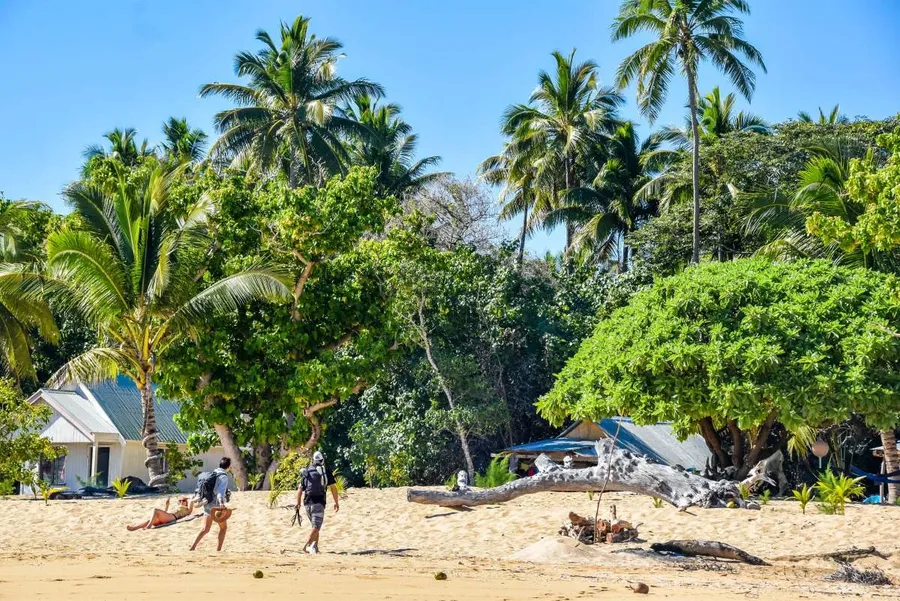
An idyllic island paradise away from the crowds, Tonga is a popular destination for honeymoons and romantic getaways.
While elopements and destination weddings are possible, getting legally married in Tonga involves a formal process that foreign couples need to plan carefully for.
Foreigners can legally marry in Tonga, but applications are handled through the Registry Office under the Ministry of Justice, and couples should allow sufficient time in-country to complete all legal requirements. The marriage requirements for Tonga generally include:
- Being legally eligible to marry
- Holding a valid passport
- Providing the required personal documents
- Applying for and receiving a Marriage License
- Having the marriage officiated by an authorised registrar or minister
We go through how to obtain these, along with the documents needed and other things to consider, in this complete guide to the Tonga marriage requirements for foreign couples.
While you're here, don't forget to bookmark our complete wedding guide, Everything You Need to Know About Getting Married in Tonga.
This article is based on real on-the-ground research, not on AI scraping old content from the internet. Learn how we use AI!
Table of Contents
Conditions for Getting Married in Tonga
Overseas residents wishing to get married in Tonga need to meet the following conditions:
- Both parties must meet the minimum legal age to marry in Tonga, which is 18 years old
- Applicants under the age of 18 may be required to provide parental or legal guardian consent, subject to approval by the Registry Office
- Both parties must hold a valid passport
- Birth certificates are required for both parties
- If previously married, proof of marital status must be provided (such as a divorce decree or death certificate of a former spouse)
- Any documents not in English must be officially translated
- If on a Visitor’s Visa, you must apply for a permit from Tonga’s Immigration Authority before obtaining a Marriage License from the Supreme Court Registry
- If you’re on a Visitor’s Visa, you must reside in Tonga for at least one month before the intended wedding date.
Note that if you are on a student, employment or residency visa you do not need to apply to Tonga’s Immigration Authority for a permit.
It’s also important to plan your travel timeline carefully. Processing times are not guaranteed, and approval may be affected by incomplete documents, public holidays, or the availability of registry officials or church ministers.
Couples are strongly advised to allow extra time in Tonga before their intended wedding date.
Find out more about extending your visa in How Long Can You Stay in Tonga on a Visitor Visa?

Applying for an Immigration Authority Permit
Couples from overseas need to obtain permission from the Immigration Authority in order to apply for a Marriage License.
Immigration is not only involved at the permit stage. Couples must also ensure they hold the correct visitor visa status to legally remain in Tonga for long enough to complete the marriage process.
It’s important to note that marrying in Tonga does not grant residency, work rights, or citizenship, and all immigration requirements must still be met independently of the marriage process.
The Extended Visitor’s Visa in Tonga
Couples wishing to marry in Tonga are generally required to reside in the country for a minimum period before a Marriage Certificate can be issued. In practice, this often means allowing at least one month in Tonga, particularly once document checks, registry approvals, and scheduling are taken into account.
As a standard Visitor’s Visa is typically valid for one month, couples may need to apply for an extended Visitor’s Visa to ensure they have sufficient time to complete all formalities before their intended wedding date.
Processing times are not guaranteed and may vary depending on:
- Whether documents are complete and accepted on arrival
- Internal approvals from senior registry or immigration officials
- Public holidays and church or registrar availability
Extended Visitor’s Visas can be arranged through a Tongan consulate overseas or applied for in Tonga at Immigration offices in Nuku‘alofa and Neiafu. Couples are strongly advised to allow extra time in Tonga rather than relying on minimum timelines.
Find out more about the process in How Long Can You Stay in Tonga on a Visitor Visa?
The Immigration Authority Permit for Marriage in Tonga
Once you have confirmed that you can legally remain in Tonga for long enough, you must apply for an Immigration Authority Permit, which authorises you to proceed with a Marriage License application.
The following documents are typically required:
- One passport photo of each party
- A photocopy of each party’s passport
- Certified copies of birth certificates for both parties
- If necessary, death certificate of spouse
- If divorced, a copy of the Decree Absolute
- An affidavit or statutory declaration of no impediment to marriage
- An affidavit stating parties have no criminal record
- Application fee (approximately TOP$345, subject to change).
Statutory declarations or affidavits are generally accepted and may be issued by a lawyer, the Supreme Court, or, depending on nationality, through an embassy or home country authority. Requirements can vary by nationality, so couples should confirm acceptable formats in advance.
Processing with the Immigration Division usually takes several working days, but timeframes may vary and should not be assumed to be fixed.
For further information, contact the Immigration Division:
Immigration Division
Parliament House
Vuna Road
Nuku’alofa
Phone: +676 26 969 or +676 26 970
Email: [email protected]
or
Immigration Division
Level 1, Sanft Building
Neiafu
Phone: +676 26 969 or +676 26 970
Email: [email protected]

Applying for a Special Marriage License
Once the couple has been in Tonga for a sufficient period and has received their Immigration Authority Permit (see above), they must apply for a Special Marriage License through the Supreme Court Registry, which sits under the Ministry of Justice.
A standard Marriage License generally applies to couples who have resided in Tonga for a longer period, while a Special Marriage License allows eligible foreign couples to marry after a shorter period of residence. In practice, this is commonly around one month, although processing timelines are not guaranteed and may vary depending on document completeness, internal approvals, and public holidays.
Couples should allow additional time in Tonga beyond minimum timelines and should not rely on fixed processing periods.
To apply for a Special Marriage License, the following documentation is typically required:
- Joint application letter by bride and groom-to-be
- Affidavit or statutory declaration by the joint applicants stating their intention to marry and their substantial link to Tonga
- Original Birth Certificate for each party
- Passport for each party
- Letter or permit from Immigration, where required (the Immigration Authority Permit)
- Divorce decree or death certificate of a former spouse, where applicable
- Letter from the officiating church minister or authorised celebrant (Minister’s Form), where applicable
- Application fee (approximately TOP$32 for foreign passport holders, subject to change.
All documents not in English must be officially translated. Requirements may vary depending on nationality and individual circumstances.
Where to Register for a Special Marriage License
Marriage licenses must be obtained from the Chief Registrar or Registrar at the Supreme Court Registry office, which is a part of the Ministry of Justice.
You cannot make an appointment to obtain a Marriage License, you just need to show up and wait for a Chief Registrar or Registrar to be available.
The Supreme Court Registry office is located at the following address:
Supreme Court Registry Office (Ministry of Justice)
Corner of Lavinia and Kausela Roads
Nuku’alofa
Opening hours: 8:30 am-4:30 pm, Monday to Friday and closed on weekends and public holidays.
Processing for the Marriage License takes up to one day, so you may need to return later to pick up the Marriage License.

Returning Your Marriage Certificate
Once a Special Marriage License has been issued, the license must be solemnised by an authorised minister or registrar and then returned to the Supreme Court Registry together with the completed Marriage Certificate so the marriage can be formally registered.
There is a limited timeframe for returning the solemnised license and Marriage Certificate. While this is commonly up to 18 days, couples should be aware that timelines are enforced by the Registry and delays can create additional administrative requirements.
It is strongly recommended that couples return the documents as soon as possible after the ceremony rather than relying on the maximum allowed period.
Only once the Marriage Certificate has been returned and accepted will the marriage be officially recorded.
Late Marriage Registrations
If the Marriage Certificate is returned after the permitted registration period, couples are required to submit an Application for a Late Registration of Marriage to the Supreme Court Registry.
This application typically requires the following:
- A joint letter of application signed by both parties
- An affidavit from both the bride and groom
- An affidavit from one of the witnesses
- If no witness is available in Tonga, an affidavit from a person who attended the wedding may be accepted
- A letter from the officiating church minister or authorised celebrant explaining:
- Why the marriage was not registered within the required timeframe
- The whereabouts or status of the original license
- A letter of support from a reliable source
- Application fee (approximately TOP$16, subject to change)
Late registration applications are assessed on a case-by-case basis, and approval is not automatic. Additional documentation or clarification may be requested by the Registry.

The Apostille Seal
After the marriage has been registered, some couples may need to obtain an Apostille seal on their Tongan Marriage Certificate for the marriage to be recognised or recorded in their home country.
Whether an Apostille is required depends on the laws and administrative practices of the country where the marriage will be used or registered. While Apostilles are commonly requested by many European countries, requirements can also apply to citizens of Asia, South America, and Central America. Couples should always confirm requirements directly with their civil registry, foreign affairs department, or relevant authority in their home country.
Countries that are not party to the Hague Apostille Convention may instead require a different form of document legalisation.
Some countries, including New Zealand, Australia, Canada, and the United States, generally do not require an Apostille for marriage recognition. However, couples should still confirm post-marriage registration requirements with their home authorities, as procedures can change.
In Tonga, Apostille seals are issued by the Ministry of Foreign Affairs. Couples must apply in person and present the officially registered Marriage Certificate before an Apostille can be issued.
Editor's Choice
Tofa Ramsay Shipping
Experience the ultimate island-hopping adventure with our ferry journey from Nuku'alofa to Vava'u (next day arrival), passing through Ha'apai, aboard the MV Taka-i-Pomana. This scenic voyage takes...
More About Marriage in Tonga
That's it for our guide to the marriage requirements in Tonga. For the determined few who want to persist in making their Tongan dream wedding a reality, here are more articles to help:
- 10 Reasons to Have a Destination Wedding in Tonga
- Everything You Need to Know About Getting Married in Tonga
- How to Pick the Best Honeymoon Accommodation in Tonga for You
That's it for the marriage requirements in Tonga. You might also like to check out The Honeymoon & Romantic Getaway Guide to Tonga and 10 Romantic Things to Do in Tonga for more wedding tips.